
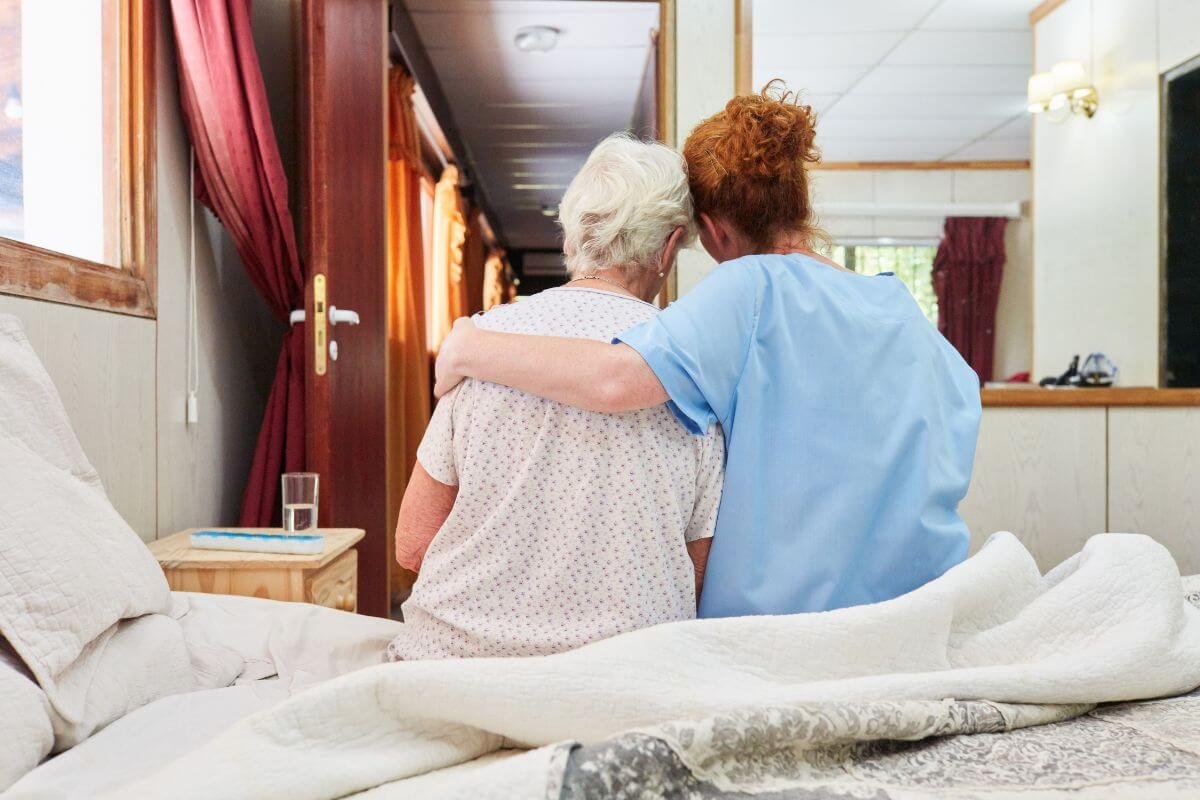
Pros and Cons of Hospice Care: What I’ve Learned as a Family Caregiver
Updated February 19, 2026
At a Glance
Hospice care provides specialized, comfort-focused care for individuals with terminal illnesses (typically a 6-month or less prognosis) who are no longer seeking curative treatment. It focuses on pain management, quality of life, and emotional/spiritual support for both the patient and their family, usually in their home or residential setting. Fifty-three percent of the Total Deaths of Medicare Beneficiaries in FY 2024 elected hospice services. Since there are pros and cons to selecting hospice care, families and patients should research their options and be familiar with hospice policies.
Navigating the final days of your loved one’s life is an emotionally challenging journey, fraught with tough decisions. When it comes to end-of-life care, hospice is often presented as an option offering comfort and support. Yet personal experiences can shape our perspectives on pros and cons.
As an adult child who faced this decision twice with my elderly parents, I grappled with the recommendation for hospice care. Both times, doctors suggested considering hospice for my parents, but I opted to care for them myself with help from the family. Reflecting on these journeys, here’s a candid exploration of the pros and cons of hospice based on my personal experiences.

Hospice Care Definition
First, let’s begin with the basics. Hospice is a specialized care program designed to offer comprehensive support and comfort to individuals with terminal illnesses during their final phase of life. The philosophy of hospice care extends beyond just the patient, catering to the emotional, spiritual, and physical needs of both the patient and their family members.
Hospice services are typically provided wherever the patient calls home, whether that’s their own residence, a nursing home, or an assisted living facility. This care is covered by Medicare’s hospice benefit and, in some cases, by private insurance. Additionally, there are private hospice facilities in many communities.

The core of hospice care lies in an interdisciplinary team consisting of hospice nurses, physicians, social workers, counselors, and other professionals. This team collaborates to address various needs:
- Symptom Management: Hospice emphasizes effective symptom management to alleviate pain and discomfort. The focus is on enhancing the patient’s quality of life and ensuring comfort care remains the priority.
- Spiritual and Emotional Support: Recognizing the importance of spiritual needs, hospice programs often include spiritual counselors or chaplains to offer guidance and support based on individual beliefs and preferences.
- Medical Supplies and Equipment: Hospice provides necessary medical supplies and equipment related to the patient’s condition. This includes items like oxygen tanks, hospital beds, and mobility aids, aiming to enhance comfort and ease.
- Palliative Care Programs: Hospice incorporates palliative care principles, aiming not just to treat the illness but also to address the broader physical and emotional needs of the patient and their family members.
The decision to recommend hospice often stems from the understanding that hospice staff members are equipped to provide specialized care for terminal illnesses. By focusing on comfort and quality of life rather than aggressive treatments, hospice allows patients to live their remaining days with dignity and in a setting that feels like home.
Hospice care recognizes the importance of family involvement and offers guidance and support to family members, also. The interdisciplinary team provides education on caregiving, emotional support, and assistance with the practical aspects of caring for your loved one in their final days.
Understanding the scope of services offered by hospice and its emphasis on holistic comfort and support can help families navigate the challenging decision of whether hospice care is the right choice for your loved one’s end of life journey.
For more information about hospice, you can contact the Hospice Foundation of America. But now we can move forward with the pros and cons of hospice based on my real-life experiences!
Potential Advantages of Hospice
When hospice organizations enter the picture, their dedicated hospice nurses become guiding beacons for both patients and families navigating difficult times. For many, facing the complexities of terminal illnesses, hospice care often emerges as the best option, offering unparalleled quality of care and comprehensive support tailored to the unique needs of hospice patients. Obviously, there are many benefits of hospice care.
This is a list of pros that support the use of hospice organizations:
- Professional Support: Hospice care provides access to a team of experienced healthcare professionals, including nurses, social workers, spiritual support, physical therapy, and aides. Their expertise in pain management and emotional support can be invaluable.
- Comfort-Focused Care: Hospice prioritizes comfort and quality of life. They offer specialized resources like pain relief, medical equipment, mobility devices, and counseling, ensuring the patient’s comfort during their final days. These services are often provided in the patient’s home with hospice care providers coming for regular visits.
- Respite for Caregivers: Hospice services can provide relief for family caregivers, offering them a chance to rest and take care of themselves while professionals handle the immediate care needs. For many, respite care becomes vitally important to the overall comfort care plan for the patient.
- 24-Hour Support: Hospice care is usually available 24/7 and gives the primary caregiver peace of mind knowing that support is available, if necessary. You can call for help as needed, and when deemed appropriate, someone will arrive to provide assistance.

Potential Disadvantages of Hospice
Navigating the decision about hospice can be challenging and sometimes clouded by a common misconception that we need to address.
Sometimes people believe that choosing hospice means solely relinquishing active medical treatments. Some individuals perceive hospice as giving up or hastening the end of life, whereas, in reality, hospice is supposed to focus on comfort, dignity, and enhancing the quality of life in the final stages of an illness.
During my research, I realized that the hospice philosophy meant different things to different hospice service providers. Therefore, the misconception surrounding hospice turned into further complications for me.
While hospice teams, led by compassionate hospice nurses, offer invaluable support to terminally ill patients, understanding the potential disadvantages of hospice care, and the common misconceptions, is crucial.
- Loss of Control: For some, hospice might feel like relinquishing control over their loved one’s care. It can be challenging to entrust the care to others, especially when you’ve been the primary caregiver. Plus, a hospice team means you have a lot of people and opinions to deal with on a regular basis.
- Incompatibility with Home Care: Hospice care might not seamlessly integrate with a family’s desire to provide care at home. When a hospice nurse comes into your home, it can easily disrupt routines and familiarity. Some families prefer maintaining a sense of normalcy by caring for their loved ones themselves.
- Desire to Offer Personalized Attention: While hospice teams are skilled, some may prefer the personalized touch that comes from caring for a loved one directly. For me, being there for every moment was crucial despite the challenges.

Walking the Alzheimer’s Path with my Sister
My sister was diagnosed with Early Onset Alzheimer’s several years ago. Recently, she entered a Memory Care Facility.
In the final stage of the disease, it was recommended that hospice be bought on board for her care. For her final few weeks of life, a hospice nurse was assigned to help with her care.
Initially, things went well. The hospice nurse was very compassionate and helpful. She adjusted medications weekly and brought in durable medical equipment to help with comfort. She was available for the family and the facility to call whenever they were concerned about something with my sister. Comfort care was clearly her primary concern. This is what I always thought hospice care was about.
However, the last few days of my sister’s life were the complete opposite. The assigned nurse went on vacation, and a new nurse was brought on board for the last four days. The new nurse stated repeatedly that the last few days and hours of the dying process are supposed to be uncomfortable and medications won’t make any difference.
I questioned this way of thinking because I believed the purpose of hospice was comfort care. In the last six hours of my sister’s life, I called for help three times and this nurse continued to tell me raspy, heavy breathing was normal and there was nothing more they could do to help my sister. She kept saying it was just part of the normal dying process, as I watched my sister’s diaphragm contract dramatically trying to pull in and push out air.
Based on years of experience with other family members in their final days, I knew this was not the purpose of hospice care. Meanwhile, I discovered that my sister was on the lowest dose of medication and the least frequency.
Ultimately, I had to call the hospice supervisor twice before I got any help for my dying sister. There was nothing comforting for my sister or me in her final hours. It was very traumatic and frustrating.
There were more horrific details that last night, but I am not comfortable sharing specifics at this time. However, you get the point how hospice care did not work for my sister in her final few days.
Based on this experience, I would not choose to use hospice again. I was shocked to learn that nurses are employed by hospice who have a personal perspective that is opposite of the hospice mission.
Hospice Foundation of America says, “Hospice provides something more for patients when a cure is not an option. It is a medical care model focused on comfort. Hospice care aims to manage the patient’s symptoms while supporting their quality of life. It provides support for family caregivers, too.”
Right now, I am appalled about what happened to my sister. Therefore, my personal perspective is that the concept of hospice care sounds excellent, but in practice it doesn’t always work so well. You will have to make your own decision based on your research and experiences, but I cannot recommend it.

Frequently Asked Questions about Hospice
In my research about hospice when it was recommended for my parents, I learned that there are some common questions people ask when considering hospice for a family member. I’ve included these FAQs to provide you with additional information to help you identify pros and cons of hospice care and whether it is right for you and your family.
Who pays for hospice care?
In the United States, the Medicare Hospice Benefit covers hospice care for terminally ill patients who are Medicare beneficiaries. This benefit provides coverage for services related to the terminal illness, including medical care, prescriptions, and support services. Private insurance may also cover hospice care, but coverage can vary based on the policy. Overall, the costs are typically covered by Medicare or private insurance within the healthcare system. However, you should always check with your loved one’s benefits department.
What qualifies a person for hospice care?
Hospice care is generally available for individuals diagnosed with a terminal condition where doctors anticipate a life expectancy of six months or less. This includes conditions like advanced cancer, heart disease, kidney disease, congestive heart failure, dementia, or other terminal illnesses. To qualify, a person typically needs a physician’s certification stating the limited life expectancy and a decision to transition from curative treatment to comfort-focused care. The patient and the family should be emotionally ready to accept that the end is near.
What’s the difference between a palliative care program and hospice care?
Palliative care is a broader approach that focuses on improving the quality of life for anyone facing a serious illness, regardless of life expectancy. It involves a team of palliative care specialists who address physical, emotional, and spiritual needs. Unfortunately, the industry is too overwhelmed in most areas of the country to provide palliative care. Hospice care, on the other hand, is a specific type of palliative care reserved for individuals with a life expectancy of six months or less. Hospice care offers a higher level of care that includes a specialized hospice nurse and is typically provided in a hospice facility or at home.
What are hospice centers?
Hospice centers are inpatient facilities that offer end-of-life care, focusing on every individual patient’s comfort and needs. Case managers coordinate services to provide compassionate care — addressing pain, symptoms, and emotional support. There are usually staff members who assist with insurance coverage while prioritizing comfort measures for those with terminal illnesses, but room and board are usually not covered. Space is usually limited, so they may not be able to accommodate your loved one’s limited time.
What I’ve Learned as a Family Caregiver
Both times, after considering the pros and cons of hospice, I chose not to opt for hospice for my parents. Instead, I dedicated myself to being their primary caregiver in their own home. It wasn’t an easy decision, but it felt right for our family. I found solace in being present for every moment, tending to their needs, and cherishing the time together.
However, this choice wasn’t without its challenges. The physical and emotional toll of being a full-time caregiver was immense. There were sleepless nights, lots of tears, moments of uncertainty, and a constant battle to balance their needs with my own well-being.
While my decision aligned with my personal values, it might not be the best choice for everyone. Hospice offers a level of professional care and support that can be immensely beneficial, providing families with the assistance needed during a profoundly challenging time.
The latest Centers for Medicare & Medicaid Services, Hospice Monitoring Report, April 2025 reports that 52.8% of the total deaths of Medicare beneficiaries in FY 2024 elected hospice services. Additionally, use of the hospice benefit, and the number of hospice organizations providing hospice services, has grown over the past four years. This data suggests that users are satisfied with hospice services.
It should be noted that I have considerable experience with caregiving that goes back to my teenage years with my grandmothers, and I have dealt with a number of family member illnesses throughout my life. Furthermore, I have held the hands of a dozen people as they transitioned from life to afterlife. So, I was not afraid of what was to come.
For my mother, we had the opportunity to choose one of the nearby hospice houses where the providers had a truly interdisciplinary approach and worked out of the multi-bed facility. However, there was a lot of red tape and emotional stress involved in the hospice admission process for these facilities and it truly became too complicated, and we ran out of time.
For my dad, he was not ready to face the thought of dying. So, my sister and I chose not to even discuss hospice with him, and I moved in with him for the last eight months of his life. It was a wonderful time for both of us! In those months when we were roomies, I learned so much from him — about our family going back to the 1700’s and about how strong both of us could be together. We laughed more during those months than ever — and figured things out together, too.
And, in my update, I shared the experience we had later with my sister. Hospice was initially a good decision but then deteriorated quickly. While it helped in the end, it was also unnecessarily traumatic.

Final Thoughts: Pros and Cons of Hospice
Deciding on hospice care is deeply personal and nuanced. My experience taught me that there’s no one-size-fits-all answer. It’s essential to consider the needs of the patient, the family’s dynamics, and the available support system.
Ultimately, whether to choose hospice or not is a decision best made by weighing the pros and cons while considering the individual circumstances. The goal is to ensure the utmost comfort and dignity for our loved ones in their final days, whether through hospice care, medical treatment, or family caregiving.
As I look back on my journey, I’m grateful for the time spent caring for my parents. It was challenging but immensely rewarding. I hope my insight helps others make the right decision for their loved ones during this delicate phase of life.
For those of you navigating a family caregiving role, you will find these Related Articles helpful:
- How to Create an At-Home Care Plan (With Template)
- Feeling Trapped Caring for Elderly Parents? Here’s Help!
- A Comprehensive Caring for Aging Parents Checklist
- Caregiving Advice: Walking Through Anticipatory Grief
With love and light,
Susan B ✨